
The Guide to Using a Research Assistant for Better Workflow
We live in an age of information overload. For university students, market analysts, and academic scholars, the challenge is no longer finding data—it is making sense of it. This is where a modern research assistant becomes essential.
In the past, a research assistant was a person hired to physically search through libraries and photocopy journals. Today, the term has evolved. It now refers to sophisticated software and AI-driven tools designed to augment human intelligence. These digital assistants are revolutionizing workflows by handling the repetitive tasks that slow us down.
This article explores why every serious researcher needs a digital companion and how advanced features like aii auto are setting new standards for efficiency.
The Role of a Modern Research Assistant
Why do you need a research assistant? The answer is simple: time management. Research is naturally a time-consuming process involving searching, reading, filtering, and citing. Doing this manually is not only slow but also prone to human error.
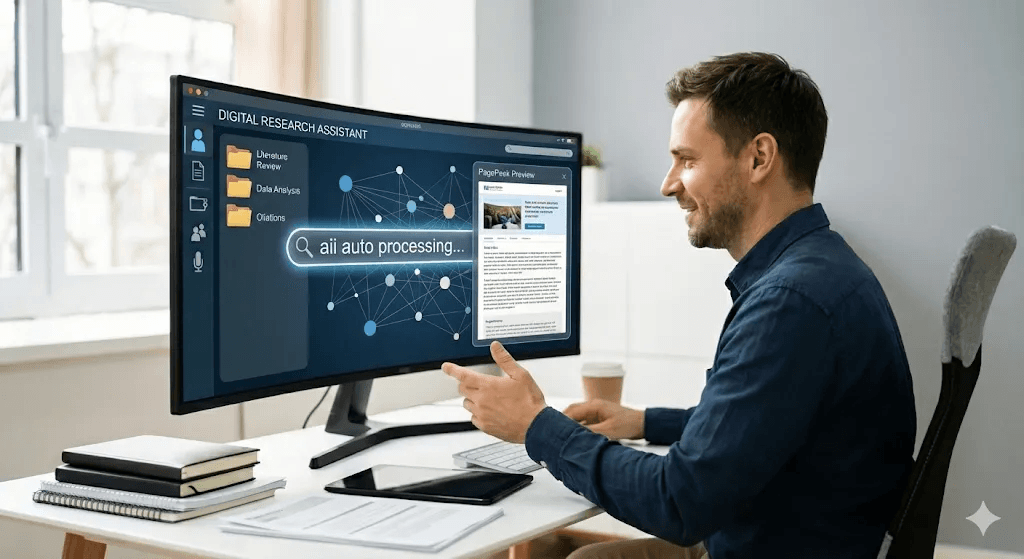
A digital research assistant acts as your second brain. It works in the background to gather and organize information. Instead of spending hours scrolling through search engine results, your assistant filters the noise and brings relevant sources directly to your dashboard. This shift allows you to focus on the "big picture" analysis rather than getting bogged down in administrative busywork.
Unlocking Efficiency with Aii Auto
To understand the true power of these tools, we must look at the underlying technology. One of the most impactful features in current software is aii auto. This term refers to automated information integration, a capability that allows a research assistant to process data without constant user input.
Imagine you are compiling a bibliography. With standard tools, you might have to manually enter author names and dates. However, a tool equipped with aii auto does this for you. It automatically detects metadata from web pages and PDFs, populating your database instantly. This seamless integration of aii auto transforms a static tool into a proactive partner, significantly reducing the "time-to-insight" for complex projects.
Streamlining Literature Reviews
The literature review is often the most dreaded part of any academic project. You have to scan hundreds of abstracts just to find a few nuggets of useful information. A research assistant excels in this domain.
By using natural language processing, these tools can scan documents in seconds, highlighting key themes and conclusions. When aii auto is applied here, the system can even suggest related papers that you might have missed. If you are researching "renewable energy," the system might automatically pull up the latest statistics on "solar efficiency" without you even asking. This creates a "self-driving" research experience that ensures comprehensive coverage of your topic.

Organizing and Citing with Ease
Collecting data is only half the battle; organizing it is where many projects fail. A robust research assistant serves as a centralized library for all your findings. It tags, categorizes, and links related documents, creating a knowledge graph that is easy to navigate.
Furthermore, the best research assistant tools integrate directly with writing software like Microsoft Word or Google Docs. This means you can insert citations while you write. Thanks to aii auto capabilities, these citations can be updated in real-time. If a source’s details change online, your document updates automatically, preventing the embarrassment of broken links or incorrect references.
Human vs. Digital: Finding the Balance
Can a piece of software replace a human? Not entirely. A human research assistant brings critical thinking and ethical judgment that AI cannot replicate. However, hiring human staff is expensive.
For independent researchers, a digital research assistant offers the perfect balance. It handles 80% of the workload—the data mining and sorting—at a fraction of the cost. This allows the human researcher to focus on creativity and synthesis.
Conclusion
The landscape of research is changing. Sticking to manual methods in a digital world is a recipe for burnout. A modern research assistant is no longer a luxury; it is a necessity for productivity.
By leveraging technologies like aii auto, you can process information faster, organize it better, and write with greater confidence. Whether you are writing a thesis or a business report, upgrading your toolkit with a reliable research assistant is the smartest move you can make. Work smarter, not harder, and let the automation handle the rest.
Ready to accelerate your research?
Join 50,000+ academics using PagePeek today.